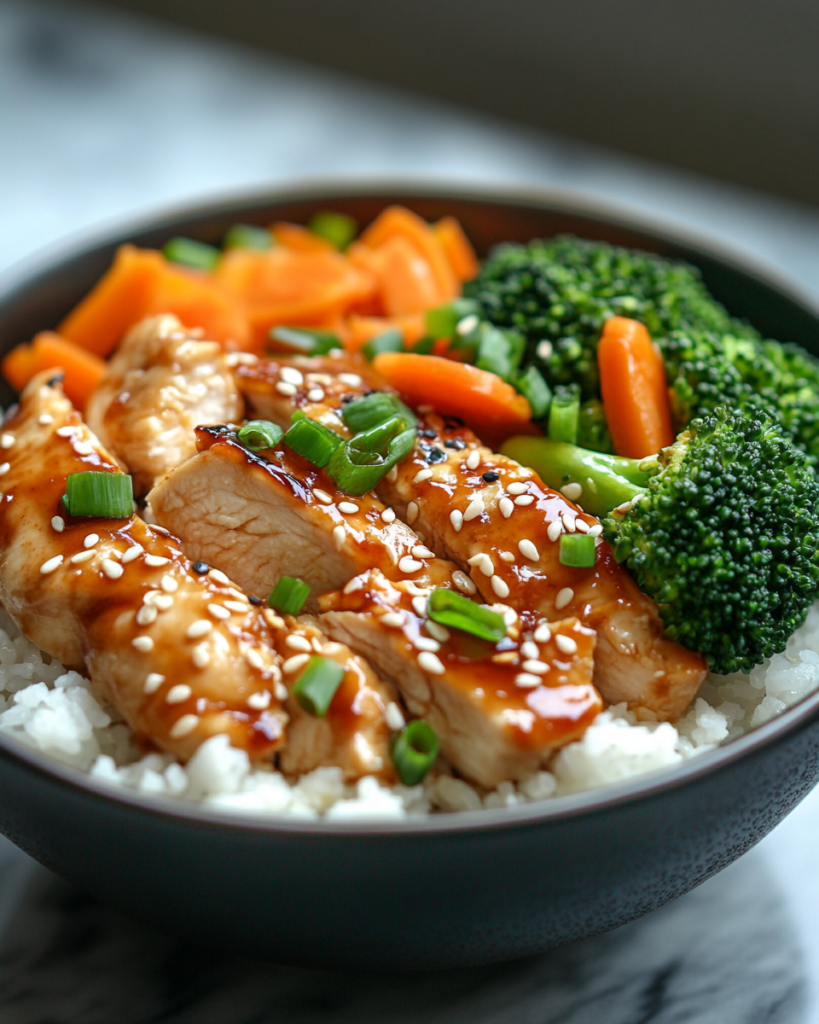
Teriyaki Chicken Bowls bring together tender chicken, glossy sauce, fluffy rice, and crisp vegetables in a satisfying dinner packed with sweet-savory flavor. This dish carries a balance of soy sauce, garlic, ginger, and brown sugar that coats every bite with rich depth and gentle caramelized notes.
These bowls fit busy weeknights, relaxed family dinners, and meal-prep plans alike. The chicken cooks quickly while the sauce thickens into a silky glaze that clings beautifully to rice and vegetables. Fresh toppings such as cucumber, green onion, sesame seeds, or steamed broccoli add freshness and contrast.
A homemade teriyaki sauce gives this dish a richer flavor than many restaurant versions. The ingredients remain simple, yet the final bowl feels hearty and comforting without requiring complicated steps. Every layer contributes texture and flavor, from juicy chicken pieces to warm rice and lightly crisp vegetables.
Ingredients Overview

Chicken thighs work particularly well for Teriyaki Chicken Bowls because they remain juicy during cooking and absorb sauce beautifully. Boneless skinless thighs deliver rich flavor and a tender texture, although chicken breast also works for a leaner option. Thin slices cook quickly and brown nicely in a hot skillet.
Soy sauce forms the savory base of the teriyaki glaze. Low-sodium soy sauce keeps the dish balanced while still providing deep umami flavor. Brown sugar brings gentle sweetness and helps create the glossy coating associated with classic teriyaki dishes. Honey can replace brown sugar for a slightly floral finish.
Fresh garlic and ginger contribute warmth and aromatic depth. Freshly grated ginger carries a brighter flavor than powdered versions, while garlic rounds out the sauce with savory richness. Rice vinegar adds slight acidity that balances the sweetness.
Cornstarch thickens the sauce into a smooth glaze that coats the chicken evenly. Without it, the sauce remains thin and watery. Sesame oil contributes nutty aroma and richness, especially when drizzled lightly near the end of cooking.
Steamed rice provides a soft foundation that absorbs the flavorful sauce. Jasmine rice offers floral fragrance, while brown rice brings nuttier flavor and extra fiber. Vegetables such as broccoli, carrots, edamame, snap peas, or cabbage add freshness and color while balancing the richness of the chicken.
Ingredients
1 1/2 pounds boneless skinless chicken thighs, sliced into bite-sized pieces
2 tablespoons vegetable oil
3 cups cooked jasmine rice
1/2 cup low-sodium soy sauce
1/4 cup brown sugar
2 tablespoons honey
2 cloves garlic, minced
1 tablespoon freshly grated ginger
1 tablespoon rice vinegar
1 teaspoon sesame oil
1 tablespoon cornstarch
2 tablespoons water
2 cups broccoli florets
1 cup shredded carrots
1 cup shelled edamame
2 green onions, thinly sliced
1 tablespoon sesame seeds
Step-by-Step Instructions

Begin by preparing the teriyaki sauce. In a medium bowl, whisk together soy sauce, brown sugar, honey, garlic, ginger, rice vinegar, and sesame oil. In a separate small bowl, stir the cornstarch with water until smooth, then whisk that mixture into the sauce. Set aside while preparing the chicken and vegetables.
Cook the rice according to package directions if it has not already been prepared. Warm rice works best because it absorbs the sauce easily and keeps the bowls comforting and hearty.
Heat a large skillet over medium-high heat. Add vegetable oil and allow it to heat fully before adding the chicken. Spread the chicken pieces into a single layer whenever possible. Crowding the pan traps steam and prevents browning.
Cook the chicken for about 4 to 5 minutes, stirring occasionally, until golden around the edges. Continue cooking until the internal temperature reaches 165 degrees Fahrenheit. Proper browning contributes richer flavor throughout the finished bowl.
Transfer the cooked chicken temporarily onto a plate if excess liquid collects in the skillet. Remove extra moisture carefully so the sauce thickens properly rather than turning watery.
Add broccoli and edamame into the skillet. Stir frequently for about 3 to 4 minutes until the vegetables become vibrant and slightly tender while still carrying gentle crispness. Add shredded carrots during the final minute since they soften quickly.
Return the chicken to the skillet. Pour the prepared teriyaki sauce over everything and stir continuously while the sauce simmers. Within several minutes, the glaze thickens and coats the chicken evenly with a glossy finish. Reduce heat slightly if the sauce bubbles too aggressively.
Taste the sauce before serving. Additional soy sauce adds savory depth, while extra honey softens salty notes. Small adjustments help balance the flavor according to personal preference.
Divide warm rice among serving bowls. Spoon the glazed chicken and vegetables over the rice. Scatter sliced green onions and sesame seeds across the surface for texture and fresh flavor.
Avoid overcooking the chicken since prolonged heat can dry the meat. Likewise, avoid adding cornstarch directly into hot sauce without dissolving it first because lumps may form. Gentle simmering creates the smoothest glaze and richest coating.
Tips, Variations & Substitutions
Chicken breast can replace chicken thighs for a lighter bowl with slightly firmer texture. Thin slices cook rapidly, so close attention during cooking prevents dryness. Salmon, shrimp, or tofu also pair beautifully with teriyaki sauce.
Brown rice, quinoa, or cauliflower rice work nicely beneath the chicken. Each base changes the texture slightly while still supporting the savory glaze. Noodles can also replace rice for a comforting variation with softer texture.
Pineapple chunks contribute juicy sweetness and pair particularly well with grilled chicken. Bell peppers bring freshness and color, while snap peas add crisp bite. Mushrooms provide earthy flavor that complements soy sauce and sesame oil beautifully.
For mild heat, stir sriracha or red pepper flakes into the sauce. A small amount balances the sweetness without overwhelming the teriyaki flavor.
Meal prep remains especially convenient with these bowls. Store rice, chicken, and vegetables in separate airtight containers for several days. Reheat gently in a skillet or microwave until warmed through.
Frozen vegetables work well during busy evenings. Broccoli, edamame, and mixed stir-fry blends cook quickly and reduce preparation time significantly.
Tamari replaces soy sauce for gluten-free preparation. Coconut aminos also work, though the sauce becomes slightly sweeter and lighter in flavor.
Serving Ideas & Occasions
Teriyaki Chicken Bowls pair beautifully with cucumber salad, miso soup, or lightly dressed cabbage slaw. Pickled vegetables contribute acidity that balances the sweet-savory glaze. Roasted Brussels sprouts or sautéed green beans also complement the rich chicken beautifully.
Sparkling water with citrus, chilled green tea, or lightly sweetened iced tea pair naturally alongside these bowls. Their refreshing qualities balance the savory sauce without overpowering the meal.
These bowls fit casual family dinners, weekly meal preparation, packed lunches, or relaxed weekend gatherings. Because the ingredients remain approachable and widely available, the dish suits both routine cooking and informal entertaining.
Buffet-style serving also works wonderfully. Place rice, vegetables, toppings, and chicken in separate dishes so everyone can assemble personalized bowls according to preference. Extra sesame seeds, sliced avocado, or shredded cabbage create pleasant finishing touches.
Nutritional & Health Notes
Teriyaki Chicken Bowls contain protein, carbohydrates, and vegetables within a balanced meal structure. Chicken contributes protein that supports fullness, while rice supplies satisfying energy. Vegetables add fiber, vitamins, and texture throughout the bowl.
Using low-sodium soy sauce helps reduce overall sodium levels while preserving savory flavor. Additional vegetables increase volume and freshness without heavily increasing calories.
Brown rice contributes extra fiber and a nuttier flavor compared with white rice. Lean chicken breast lowers fat content, while chicken thighs contribute richer texture and flavor.
Homemade teriyaki sauce offers greater control over sweetness and sodium compared with many bottled sauces. Adjusting sugar and soy sauce quantities allows flexibility according to dietary preferences.
Sesame seeds and sesame oil contribute small amounts of healthy fats and nutty aroma. Balanced portions create a hearty dinner that feels satisfying without excessive heaviness.
FAQs
Can chicken breast replace chicken thighs?
Chicken breast works very well in Teriyaki Chicken Bowls, particularly for anyone preferring a leaner protein. Thin slices remain the ideal choice because they cook quickly and absorb the sauce evenly. Since chicken breast contains less fat than thighs, careful cooking remains important. Excessive heat or prolonged cooking can create dry texture.
Cooking over medium-high heat until lightly golden usually provides the best result. Removing the chicken from the skillet immediately after reaching safe internal temperature also helps preserve juiciness. A slightly thicker sauce coats chicken breast beautifully and contributes moisture throughout the bowl. Pairing the chicken with vegetables such as broccoli or snap peas adds freshness and texture that complement the lighter meat.
Which rice tastes best with teriyaki chicken?
Jasmine rice remains a favorite choice because its soft texture and light fragrance pair beautifully with savory teriyaki sauce. Short-grain white rice also works nicely because it becomes slightly sticky and holds sauce well. Brown rice contributes nuttier flavor and extra fiber for a heartier bowl.
Cauliflower rice provides a lighter alternative with lower carbohydrate content, though the texture differs significantly from traditional rice. Quinoa offers pleasant chewiness and additional protein. Regardless of the variety selected, freshly cooked warm rice produces the best result because it absorbs the glossy sauce beautifully. Slightly undercooked or dry rice may reduce the comforting texture that makes these bowls particularly satisfying.
How long can leftovers stay refrigerated?
Properly stored leftovers usually remain fresh for about four days in airtight containers within the refrigerator. Keeping the rice separate from the chicken and vegetables helps preserve texture during storage. Moisture from the sauce can soften rice excessively after prolonged refrigeration.
Reheat gently in a skillet over medium heat or warm portions gradually in the microwave. Adding a small splash of water during reheating helps loosen thickened sauce and restore smooth consistency. Avoid repeated reheating whenever possible since it may dry the chicken and soften the vegetables too much. Fresh green onions and sesame seeds taste best when added immediately before serving rather than during storage.
Can these bowls work for meal preparation?
These bowls fit meal preparation particularly well because the ingredients reheat nicely and remain flavorful for several days. Cooked chicken, rice, and vegetables can be portioned into containers for convenient lunches or dinners throughout the week.
Allow the ingredients to cool slightly before sealing containers to reduce trapped moisture. Storing sauce separately provides slightly fresher texture, though fully assembled bowls also reheat successfully. Adding fresh toppings such as cucumber, avocado, or green onions immediately before serving helps preserve freshness and texture. Meal-prep versions also allow easy portion control while reducing weekday cooking demands. Balanced ingredients create filling lunches that travel well and remain satisfying after reheating.
Which vegetables pair nicely with teriyaki sauce?
Broccoli remains a classic pairing because its slight bitterness balances the sweet glaze beautifully. Carrots contribute gentle sweetness and vibrant color, while edamame adds texture and protein. Snap peas provide crisp bite that contrasts with tender chicken and soft rice.
Bell peppers contribute freshness and slight sweetness, especially red or yellow varieties. Mushrooms absorb sauce exceptionally well and contribute earthy flavor. Cabbage softens beautifully during cooking and stretches the meal economically. Zucchini and bok choy also pair naturally with soy-based sauces. A combination of crisp and tender vegetables usually creates the most satisfying bowl with varied texture and balanced flavor throughout each serving.
Can bottled teriyaki sauce replace homemade sauce?
Bottled teriyaki sauce certainly works during busy evenings and still creates flavorful bowls. However, homemade sauce typically carries fresher flavor and allows better control over sweetness, sodium, and thickness. Many bottled sauces contain significant sugar or sodium levels that may overpower the dish slightly.
When using bottled sauce, taste it before cooking and adjust carefully if necessary. Additional garlic, ginger, or rice vinegar can brighten the flavor. Cornstarch may still help create thicker glaze if the bottled sauce appears thin. Homemade sauce usually requires only several pantry ingredients and cooks quickly, making it a worthwhile option for richer flavor and fresher aroma.
What toppings pair well with these bowls?
Green onions and sesame seeds remain classic toppings because they contribute freshness and gentle crunch. Thin cucumber slices provide cool contrast against the warm chicken and rice. Avocado contributes creamy texture that balances the savory sauce beautifully.
Pickled vegetables such as radishes or carrots add acidity and brightness that cut through the richness of the glaze. Crushed roasted peanuts or cashews contribute crunch and nutty flavor. A drizzle of spicy mayo or chili sauce works nicely for diners who enjoy slight heat. Fresh cilantro, shredded cabbage, or lightly steamed spinach also complement the bowl beautifully while contributing additional color and texture.